Snowflake Agent
End-to-end walkthrough for onboarding a Snowflake Agent via the Trusted Agent Huddle to the gallery using the AI Refinery runtime.
This walkthrough shows how to add the Snowflake Agent via the Trusted Agent Huddle, upload its runtime definition, configure credentials, and run validation queries inside the Agent Gallery.
1. Create the Snowflake Agent
From the Agent Gallery toolbar select Add Agent, pick the owning organisation, and fill out the metadata (identifier, display name, description, licence, and type) for the Snowflake Agent.
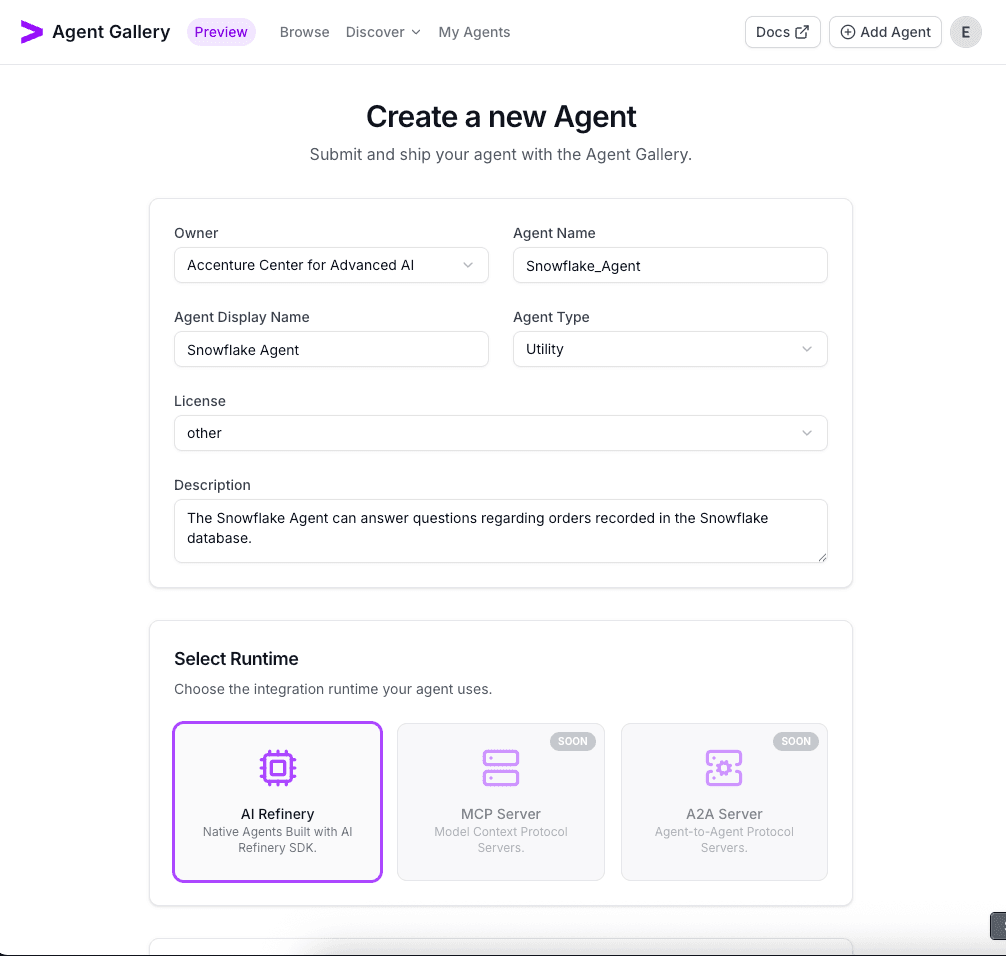
Click Create Agent to provision the new entry and advance to its overview page.
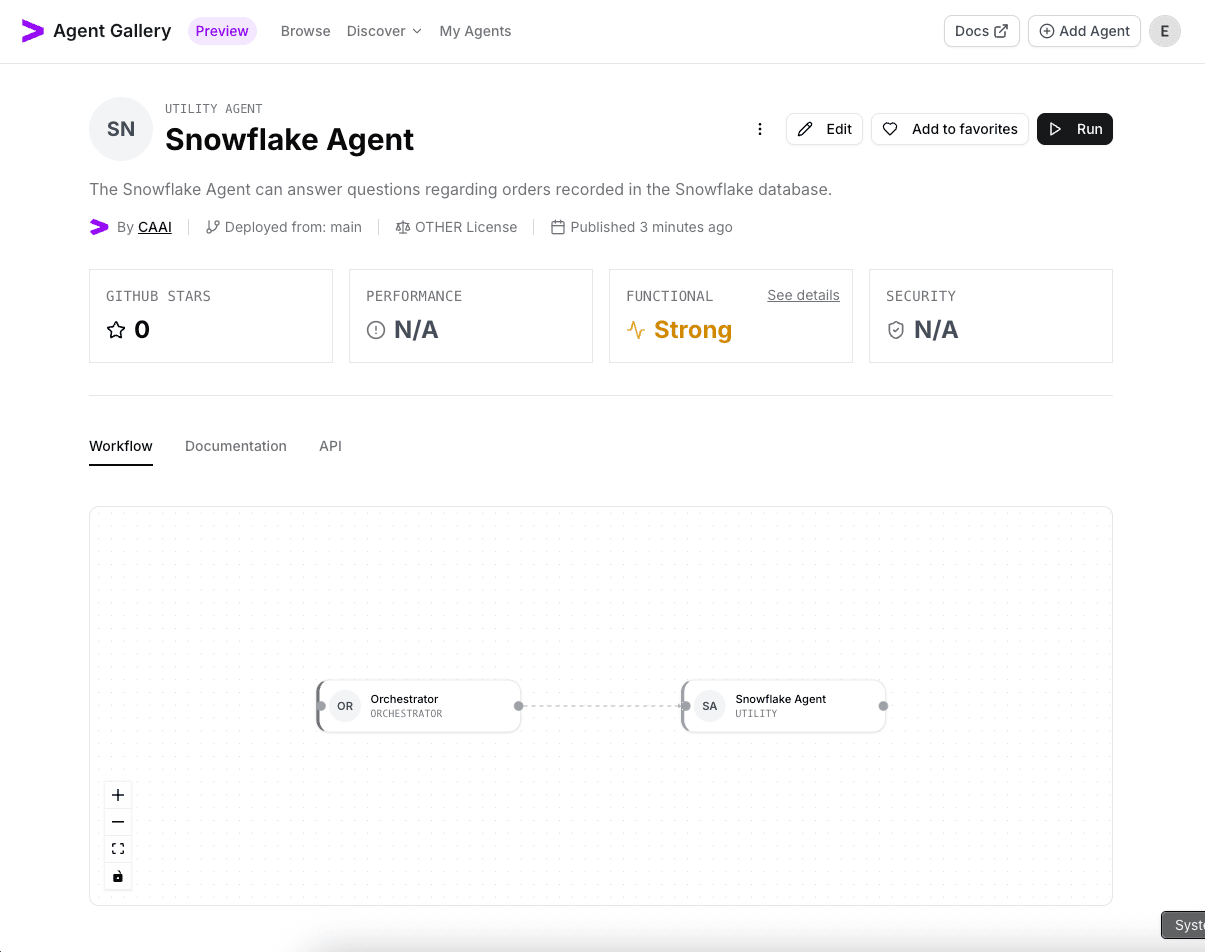
2. Upload the runtime YAML
Use Edit → Runtime, confirm the runtime type matches your Snowflake integration, and upload example.yaml with the agent definition below.
orchestrator:
  agent_list:
    - agent_name: "Snowflake Agent"  # The name you choose for your Snowflake agent.

utility_agents:
  - agent_class: SnowflakeAgent
    agent_name: "Snowflake Agent"  # The name you choose for your Snowflake agent
    agent_description: "The Snowflake Agent can answer questions regarding orders recorded in the Snowflake databases."
    config:
      snowflake_password: "SNOWFLAKE_ADMIN_PAT" # Required: Name of the environment variable holding your SNOWFLAKE Programmatic Access Token (PAT)
      snowflake_services:  # Required: Dictionary containing the information of the Cortex services configured for this Cortex Agent.
        search:  # Required: List of the required Cortex Search services.
          - name: <name of the service>  # Required: Arbitrary name you choose for this Cortex Search service.
            database: <database name>  # Required: Name of the database of this Cortex Search service.
            db_schema: <schema name>  # Required: Name of the schema of this Cortex Search service.
            service_name: <name of the Cortex Search>  # Required: Name of the Cortex Search service as recorded on the Snowflake platform.
        analyst:  # Required: List of the required Cortex Analyst services.
          - name: <name of the service>  # Required: Arbitrary name you choose for this Cortex Analyst service.
            database: <database name>  # Required: Name of the database of this Cortex Analyst service.
            db_schema: <schema name>  # Required: Name of the schema of this Cortex Analyst service.
            stage: <stage name>  # Required: Name of the stage of this Cortex Analyst service.
            file_name: <file name>  # Required: Name of the schema of this Cortex Analyst service.
            warehouse: <warehouse name>  # Required: Name of the warehouse of this Cortex Analyst service.
            user_role: <user role>  # Required: User role that has access to this Cortex agent.
      snowflake_model: <LLM model>  # Required: Name of the LLM model to use with this Snowflake Cortex agent.
      snowflake_base_url: <account's base url>  # Required: Base URL Address of your Snowflake account.
      sql_timeout: <timeout in seconds>  # Optional: Timeout in seconds for execution of any SQL statement (default: 10).
      system_prompt: <response instructions>  # Optional: The instructions that the Cortex agent follows when it generates the response.
      snowflake_experimental: <experimental flags>  # Optional: Experimental flags passed to the Cortex agent (default: {}).
      snowflake_tool_choice: <tool choice>  # Optional: Configuration used to select the tools for the Cortex agent (default: "auto").
      thought_process_tracing: <tracing flag>  # Optional: Boolean flag for monitoring the thought process steps of the Cortex agent (default: False).
      contexts: # Optional additional agent contexts
        - "date"
        - "chat_history"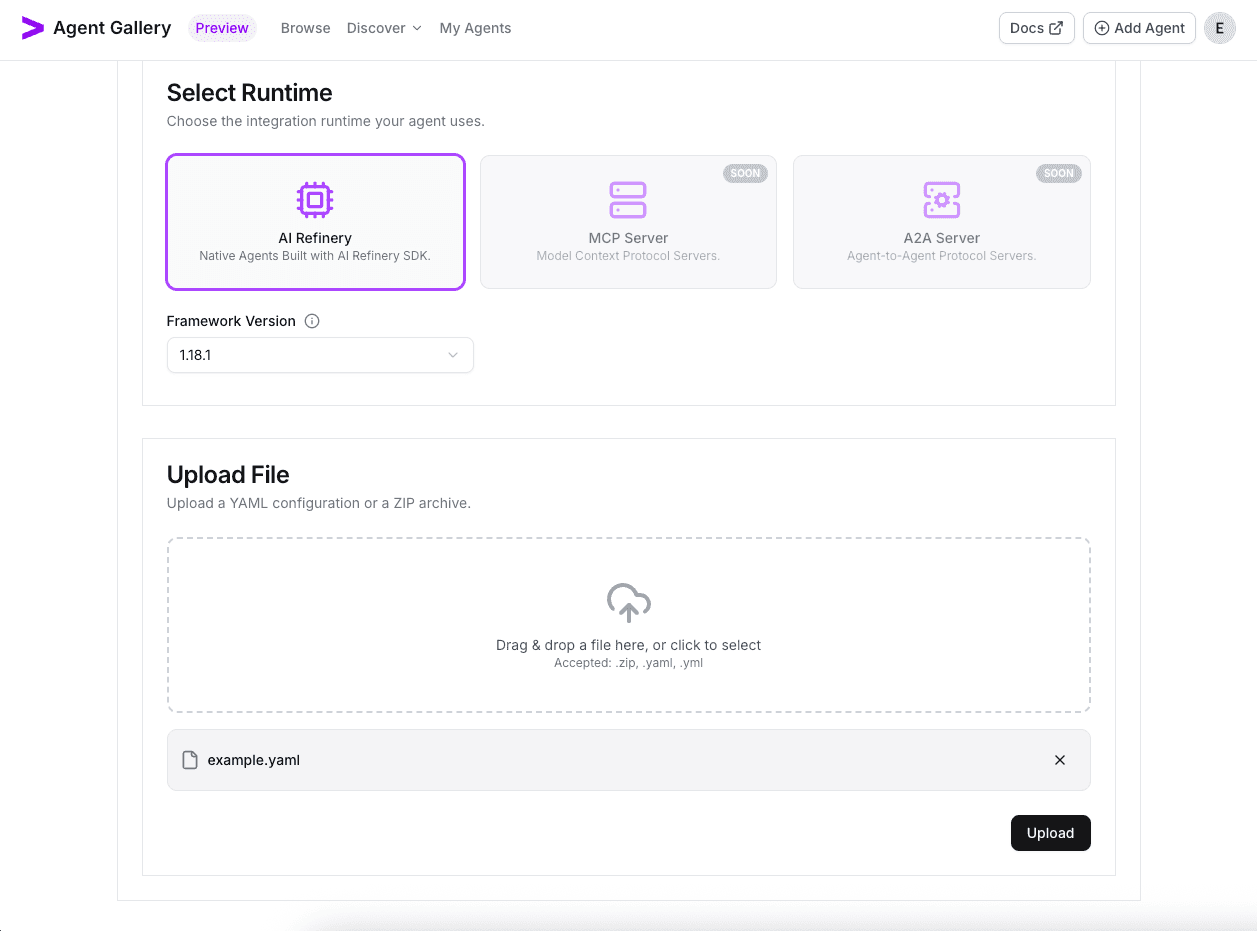
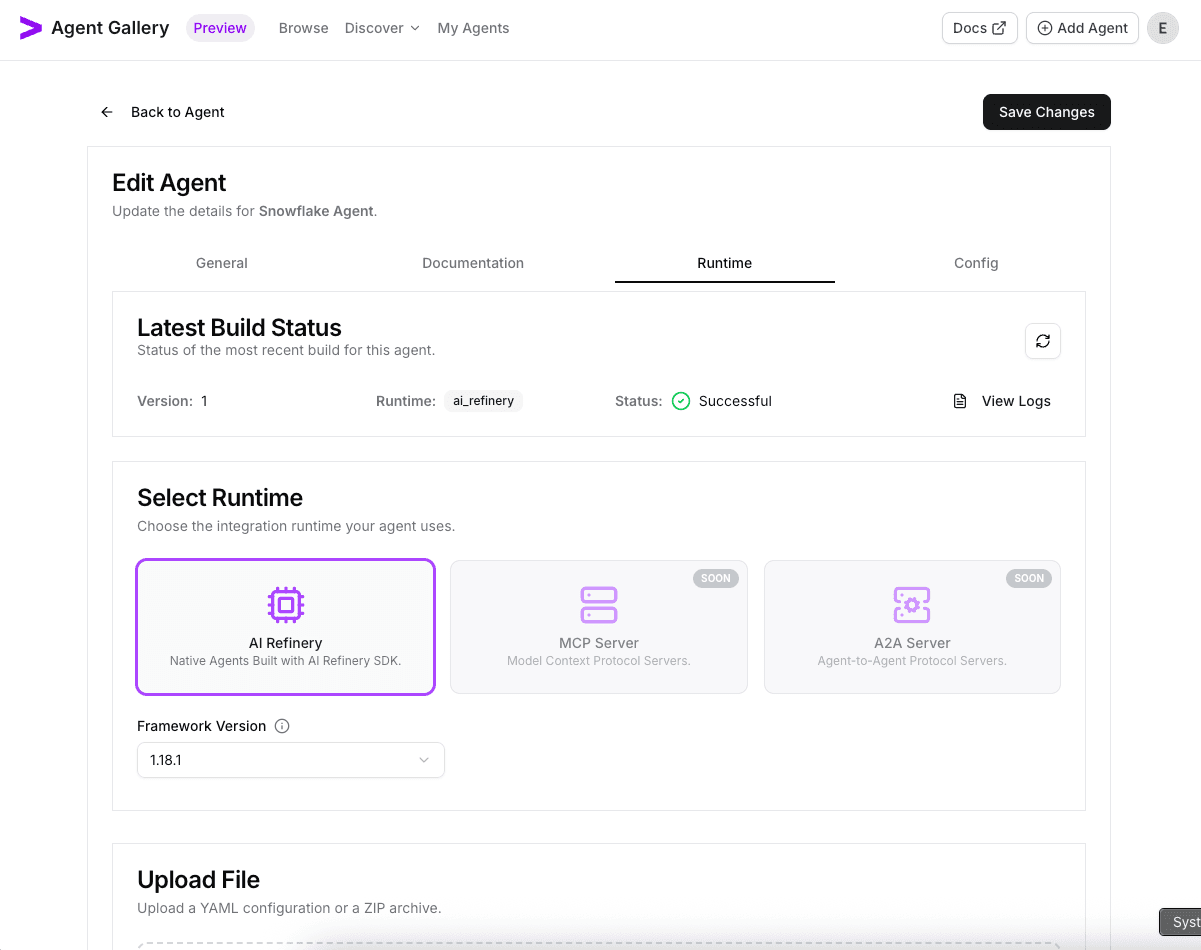
You should see in the build status that the runtime is successfully uploaded.
3. Register configuration values
Open the Config tab, choose Add Configuration, and register each Snowflake environment variable referenced in the YAML. Mark the variables as required and masked accordingly.
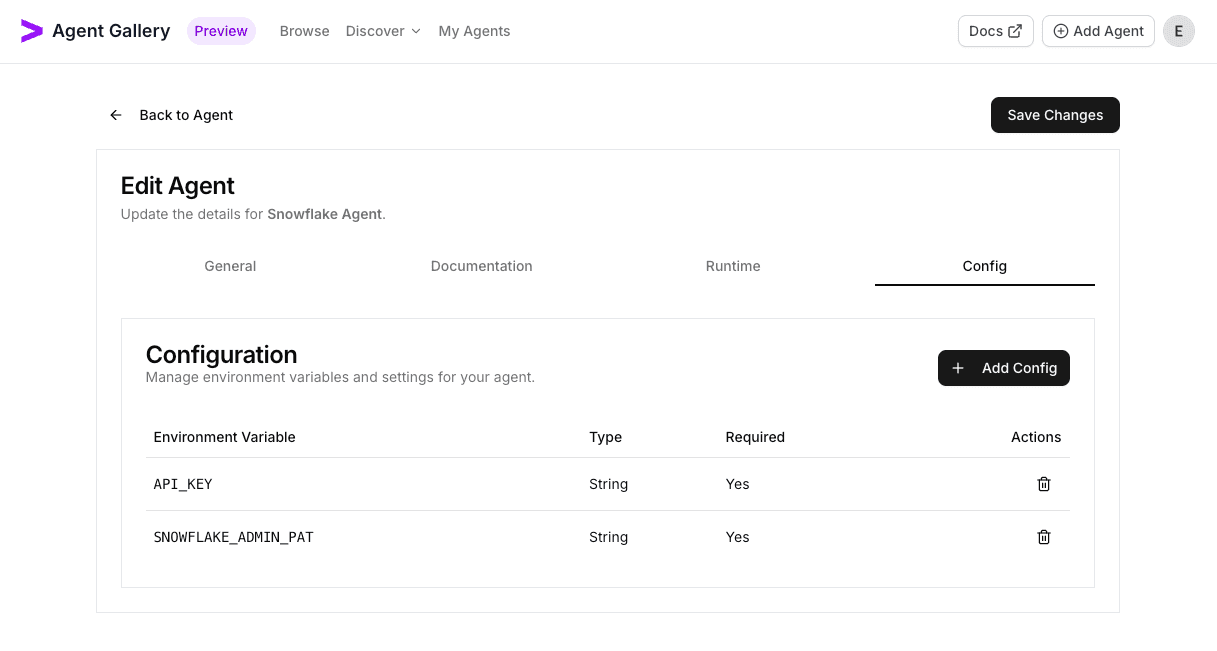
| Environment Variable | Type | Required | Description |
|---|---|---|---|
API_KEY | String | Yes | Your AI Refinery API key. |
SNOWFLAKE_ADMIN_PAT | String | Yes | Programmatic access token that authenticates to the Snowflake Cortex agent. |
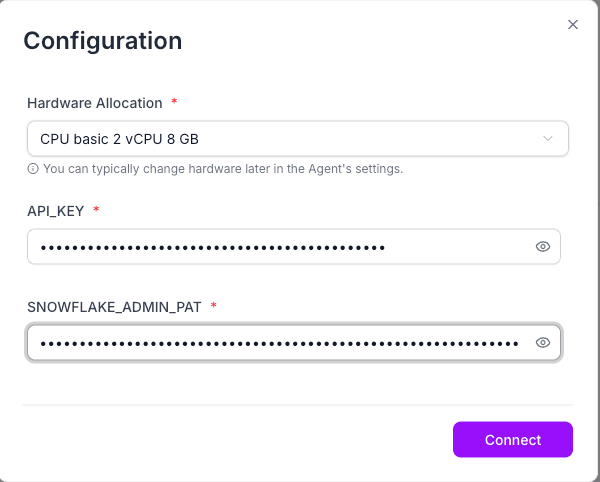
These values are prompted before a run.
4. Launch a validation run
Return to the agent overview and select Run. Choose the hardware preset, populate the configuration fields with valid Snowflake credentials, and run the agent.
5. Issue starter queries
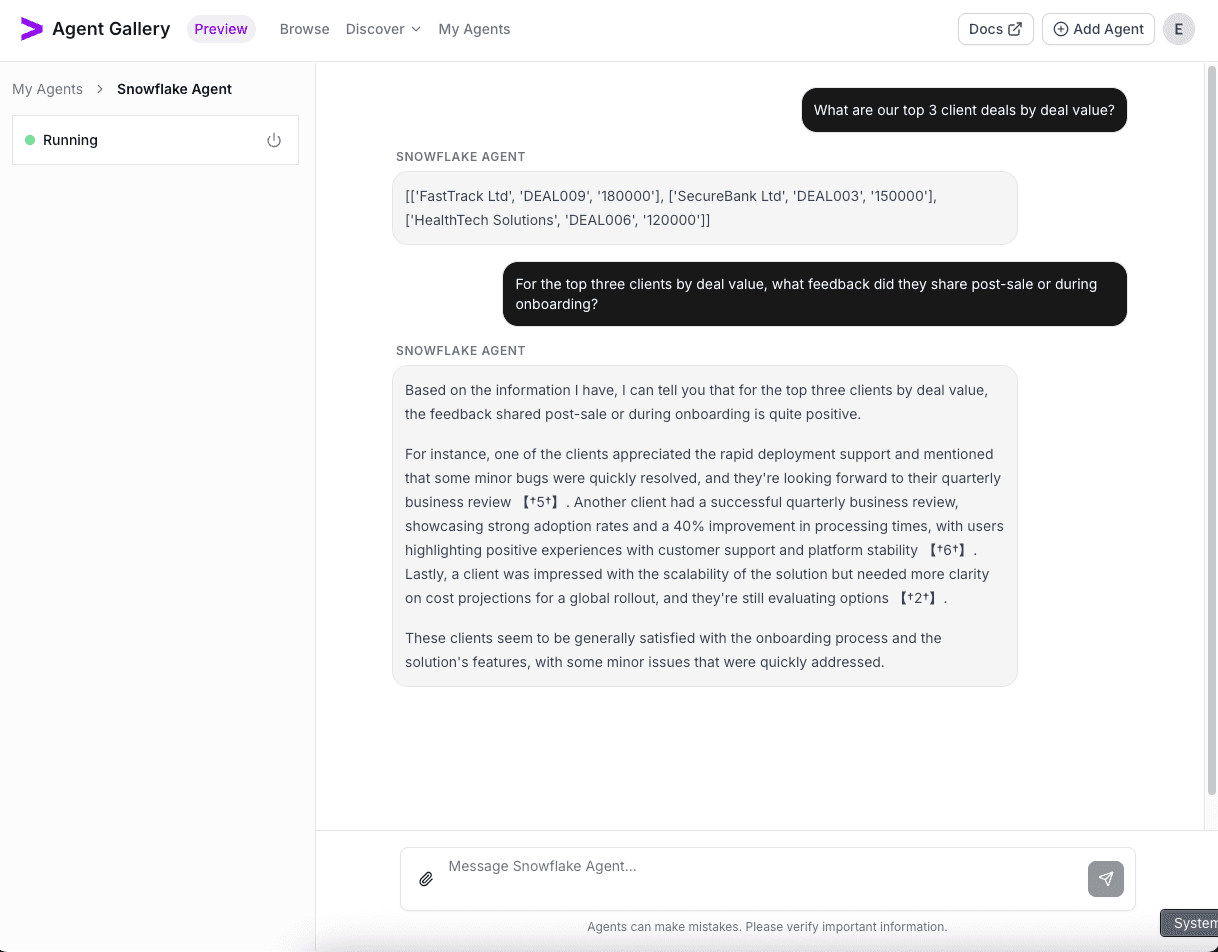
Use the chat input to ask introductory questions that verify the Snowflake Agent responds correctly—for example, request information on recent deals. Confirm the responses look correct.
6. Wrap up the session
When validation is complete, shut down the run to release compute resources.